
Most people come to Saint Lucia for the Pitons. They stay for the sunsets, the rainforest, the food, the warmth of the people. But below the surface of that deep blue water that frames every postcard view of the island — there's an entirely different world. One that most visitors never see.
Saint Lucia is one of the best scuba diving destinations in the Caribbean. That's not marketing. It's geography. The island's volcanic origins created a seabed of dramatic drop-offs, walls, and reef structures that don't exist on flatter, sandier islands. The waters around Soufrière — the island's most iconic bay — are a marine reserve, which means the reefs here have been protected for decades. The result is an underwater landscape that is genuinely thriving.
This guide covers what you'll actually find down there, the best dive sites, what to expect as a first-timer or experienced diver, and how to make diving part of a romantic trip to Saint Lucia.
Why Saint Lucia's Underwater World Is Different
Saint Lucia sits on a volcanic arc. The same geological forces that pushed the Pitons out of the sea also shaped the ocean floor around them. Underwater, you'll find sheer walls dropping into deep blue water, swim-throughs carved by volcanic activity, and reef structures covered in barrel sponges, sea fans, and hard corals that have been growing undisturbed for decades.
The Soufrière Marine Management Area (SMMA), established in 1994, protects the reefs around the bay. Fishing restrictions and conservation efforts over the past 30 years mean the marine life here is dense, varied, and visibly healthy. You'll see fish populations that have simply been allowed to grow — something increasingly rare in the Caribbean.
Water temperature stays between 26°C and 29°C (79–84°F) year-round. Visibility is typically 15–30 metres. There's very little current in the main dive sites, which makes Saint Lucia suitable for divers at every level.
The Best Dive Sites in Saint Lucia
Anse Chastanet Reef
The most accessible dive site on the island and the one most divers do first. The reef starts in just 3–4 metres of water, making it perfect for beginners and snorkelers, and drops to around 18 metres. It's home to an enormous variety of reef fish, moray eels, spotted eagle rays, and — if you're fortunate — hawksbill sea turtles moving slowly between the corals. The visibility here is consistently excellent.
Superman's Flight
A dramatic wall dive off the point near Petit Piton. You drop from about 6 metres and the wall falls away beneath you into deep blue. As you descend along the wall, you'll pass enormous barrel sponges, sea fans two metres tall, and colourful schools of fish moving in columns through the water. This is one of the most visually spectacular dives on the island — the kind of dive that experienced divers come back for.
Coral Gardens
Exactly what the name suggests — a shallow, densely planted reef at 6–12 metres that's covered in hard and soft corals, sea fans, and an almost overwhelming variety of reef fish. Butterflyfish, parrotfish, trumpetfish, and French angelfish are regulars here. It's a slow, calm, beautiful dive that suits anyone.
The Pinnacles
Four volcanic pinnacles rising from 40 metres to just below the surface, covered entirely in corals and sponges. The structures are dramatic — you descend alongside columns of rock covered in life, with open water on all sides. This site regularly draws barracuda, jacks, and occasionally larger pelagics passing through. Best for confident, experienced divers.
Lesleen M Wreck
A deliberately sunk cargo vessel that now sits at 18 metres and has been entirely colonised by coral and marine life. Wrecks create their own micro-ecosystems and this one has become a particularly rich one. You'll find lionfish, nurse sharks resting on the sandy bottom, and dense schools of glassy sweepers inside the hold. A memorable dive even if you've done many wrecks before.
What You'll See Underwater
Saint Lucia's reefs are some of the most biodiverse in the Eastern Caribbean. Here's what you can realistically expect to encounter:
Sea Turtles
Hawksbill sea turtles are commonly sighted around Anse Chastanet and Coral Gardens. They feed on the reef sponges and are largely unbothered by divers — you can often watch them move slowly across the reef at very close range. Green turtles are occasionally spotted on deeper dives.
Reef Fish
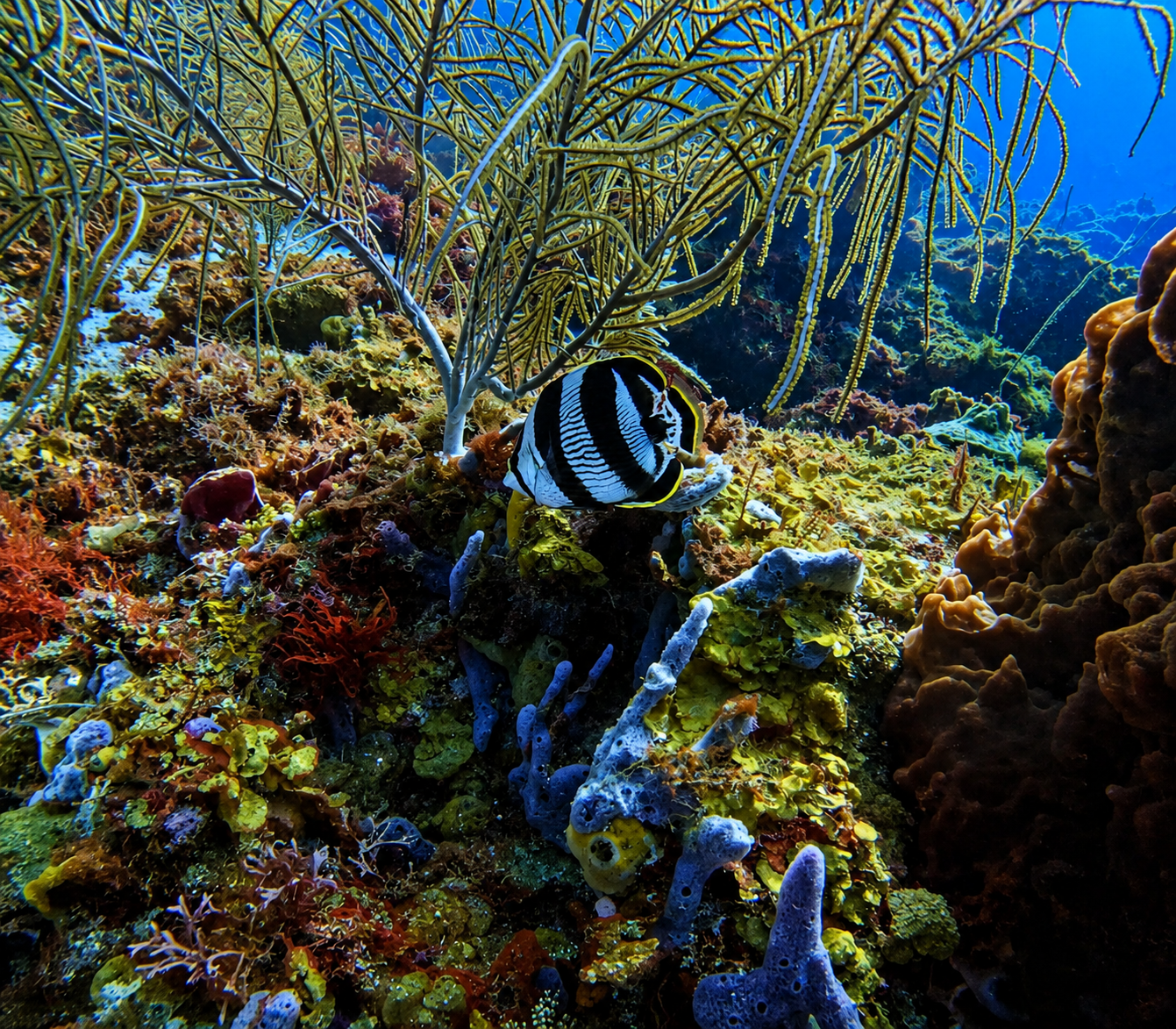
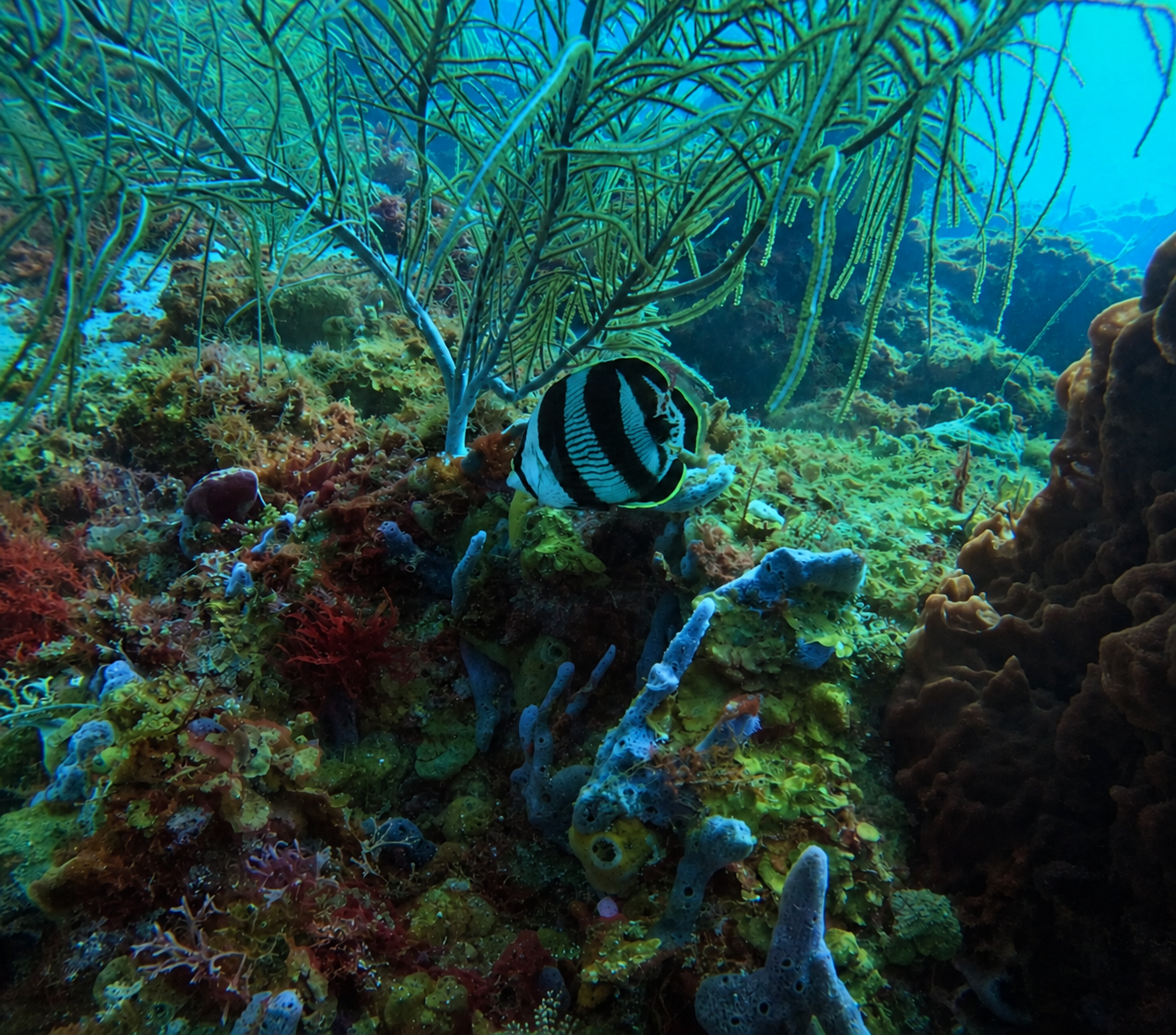
The variety is extraordinary. Banded butterflyfish, four-eye butterflyfish, queen angelfish, French angelfish, parrotfish, trumpetfish, moray eels, spotted drums, and chromis in enormous schools. The reef fish populations here are noticeably healthier than on many other Caribbean islands — a direct result of the marine reserve protection.
Lionfish
Invasive but undeniably beautiful. Lionfish have spread across the Caribbean and Saint Lucia is no exception — you'll encounter them on virtually every dive, often tucked inside barrel sponges or hovering motionless near overhangs. Don't touch them. Their dorsal spines are venomous. But from a distance, they are genuinely striking animals.
Lobsters and Crustaceans
The reef shelters a healthy lobster population. Look carefully in crevices and under ledges — spiny lobsters, arrow crabs, and banded coral shrimp are all regulars if you know where to look. A good dive guide will point them out.
Barrel Sponges
Some of the largest barrel sponges in the Caribbean grow on Saint Lucia's reefs — ancient structures that take hundreds of years to reach their full size. They create miniature ecosystems of their own, sheltering fish, shrimp, and invertebrates within and around them. The sponge diversity here is one of the things that sets Saint Lucia apart from other dive destinations in the region.
When Is the Best Time to Dive in Saint Lucia?
Saint Lucia is diveable year-round. Water temperature and visibility are reliably good in every month. That said:
- December to April is the dry season — calm seas, exceptional visibility (often 25–30 metres), and the most comfortable surface conditions. This is peak season for a reason.
- May to November is the wetter season. Rain falls mostly in short, sharp afternoon showers rather than all-day downpours. Diving is still excellent, the island is less crowded, and rates are lower. Visibility may drop slightly after heavy rainfall near the surface but remains good at depth.
- June to November is hurricane season. Saint Lucia sits south of the main hurricane belt and rarely takes direct hits — but tropical storms can create choppier surface conditions. Most dive operators continue running throughout the season.
For First-Time Divers
Saint Lucia is an excellent place to learn to dive. The warm, calm, clear water around Soufrière is forgiving and confidence-building. Several operators offer PADI Open Water courses across 3–4 days, and many resorts — including Anse Chastanet and Jade Mountain — have their own on-site dive centres.
If you've never dived before but want to try it during your trip, a Discover Scuba Diving session (a single guided dive with no prior training required) is the perfect introduction. Most operators offer these as half-day experiences. You'll be guided the entire time, depth is limited to 12 metres, and the brief training session beforehand is thorough.
Diving as Part of a Romantic Trip
Scuba diving together is genuinely one of the best shared experiences you can have as a couple in Saint Lucia. The underwater world is silent and weightless — there's something about drifting alongside a sea turtle on a coral reef that's difficult to replicate anywhere else. Couples who dive together in Saint Lucia consistently describe it as one of the highlights of their trip.
If one partner is a certified diver and the other isn't, most operators can arrange for the experienced diver to go on a full dive while the non-diver does a Discover Scuba session or snorkels above the reef. Some operators will run both sessions simultaneously so you finish at the same time.
After a morning dive, Soufrière has some of the best restaurants and beach bars on the island for lunch. Pair a dive session with an afternoon at the Sulphur Springs, a visit to the chocolate estate, or a sunset at one of the waterfront restaurants — and you have a near-perfect day in Saint Lucia.
Practical Information
- Where to dive from: Soufrière is the centre of Saint Lucia's dive industry. Most dive operators are based here or in Anse Chastanet. Day trips from Rodney Bay or Castries are possible but add significant travel time.
- What to bring: Your dive certification card (C-card) if you're certified. Dive operators provide all equipment. A rash guard or 3mm wetsuit is comfortable — the water is warm but you'll appreciate a thin layer on longer dives.
- Cost: A two-tank dive typically runs USD $90–120. Discover Scuba sessions are around $80–100. PADI Open Water courses are approximately $400–500 for the full certification.
- Booking: Advance booking is recommended during peak season (December–April). Your hotel or resort concierge can arrange this, or include it in your Luxe Amour itinerary plan.
Book it Hand-picked, with real traveller ratings and free cancellation where offered. We may earn a commission if you book, at no extra cost to you. From $130 per person Try scuba diving together for the first time in one of the Caribbean's most pristine marine reserves, stretching from Anse Cochon to Soufrière. A patient instructor takes you through everything you need — no certification or experience required, just a sense of adventure. ✓ Free cancellation From $140 per person For certified divers only — explore shipwrecks at Anse Cochon, wall and drift dives in Soufrière, or an optional night dive together, all within the protected marine reserve along Saint Lucia's sheltered west coast. ✓ Free cancellation Plan Your Journey Hotels & Resorts Booking.com — Saint Lucia Compare availability and rates at the best resorts in Saint Lucia. Check availability → Tours & Experiences WeGoTrip Curated tours and romantic experiences for couples in the Caribbean. Browse experiences → Activities & Tours Klook Book activities, day tours, and experiences across the Caribbean instantly. Browse experiences → Travel Insurance EKTA Travel insurance designed for international trips — protect your romantic getaway. Browse experiences → Airport Transfers Welcome Pickups Private airport transfers with professional, friendly drivers. Browse experiences → eSIM & Connectivity Airalo Stay connected in the Caribbean with an affordable eSIM — no roaming charges. Browse experiences → This article contains affiliate links. We may earn a commission if you book through these links, at no extra cost to you. We only recommend partners we trust.Book the experiences in this guide
Discover Scuba Diving (No Experience Needed)
Certified Scuba Diving Excursion
Everything you need to make it happen